
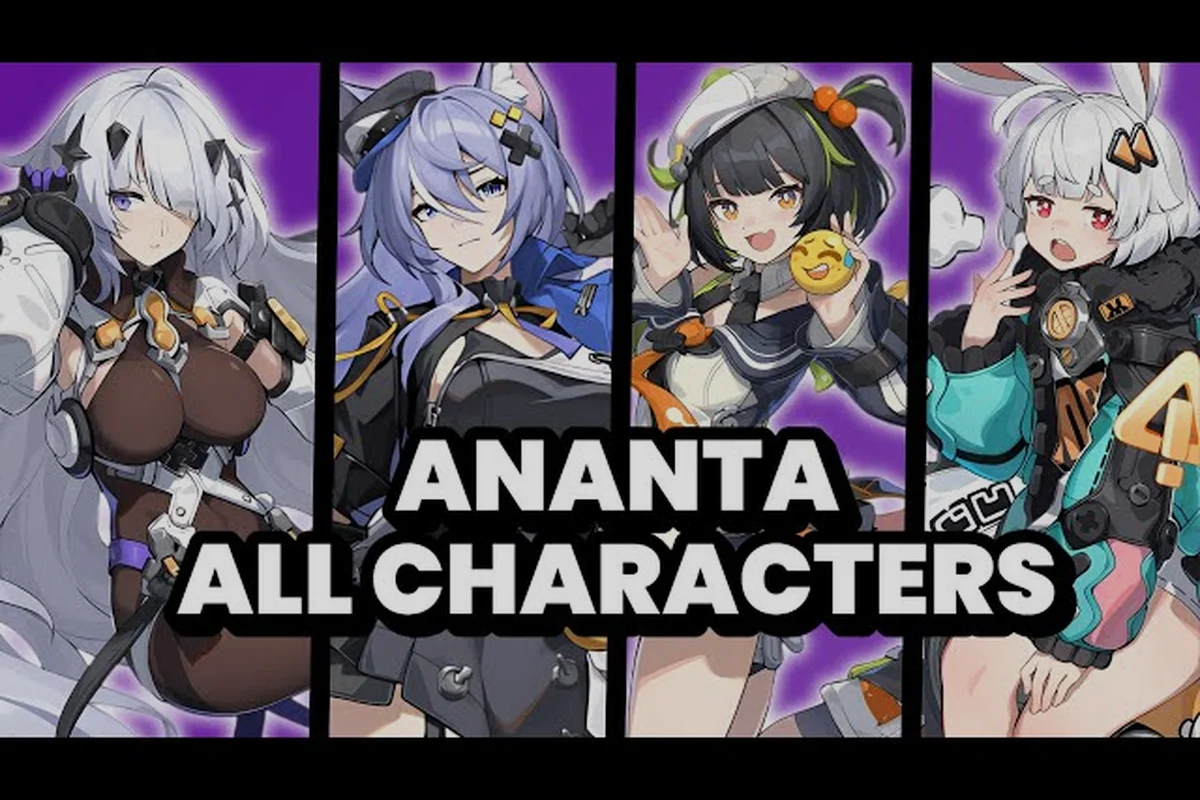
Picking the right ANANTA character roles early saves you from a painful respec grind, because each archetype in Nova City scales on a different primary stat and unlocks a unique combat rhythm. Mid-fight character switching between frontline bruisers and backline hackers is what separates casual players from those clearing the highest-difficulty bounties, so understanding stat weightings, switch windows, and upgrade priority is the single most impactful decision you make in the first ten hours.
The Core ANANTA Character Roles Archetypes
ANANTA currently ships with six playable archetypes, each tied to a specific combat lane and stat profile. The roles are not cosmetic labels; they gate which weapon skills, gadget kits, and combo extensions you can equip, and they determine the resources you should hoard during character leveling. Community testing on the closed beta build confirms that role identity locks once you finish Act 1, although a paid respec token can reset it later.
The six archetypes fall into three broad lanes: Vanguard (melee tanks), Duelist (single-target damage), and Specialist (utility and ranged). Each lane shares a primary stat pool but specializes in a different secondary, which is why raw stat comparisons between roles always mislead newer players.
| Archetype | Lane | Primary Stat | Secondary Stat | Weapon Family | Signature Ability |
|---|---|---|---|---|---|
| Ironhand | Vanguard | Fortitude | Aggression | Heavy Blade | Bulwark Stance — damage reduction aura |
| Ranger | Vanguard | Fortitude | Perception | Shotgun | Suppressive Fire — crowd control cone |
| Striker | Duelist | Aggression | Reflex | Fists | Fracture Combo — armor-shred chain |
| Bladecaller | Duelist | Aggression | Fortitude | Twin Daggers | Phantom Step — gap closer with crit bonus |
| Hacker | Specialist | Cognition | Perception | Drone | Overclock — team-wide haste buff |
| Medic | Specialist | Cognition | Fortitude | Stim Pistol | Field Triage — AoE heal over time |
The clearest takeaway from community data is that every role in ANANTA can solo story content, but only three of them — Striker, Bladecaller, and Hacker — scale smoothly into the hardest bounties because their kits generate or amplify the team buffs that the late game demands. Tanks and medics remain essential in coordinated squads, yet their personal damage ceiling plateaus around character level 45 unless you invest in very specific gear pieces.
If you are unsure which archetype fits your playstyle, the early-game Trial Gauntlet lets you test each kit for ten minutes without locking your choice. Players who skip this trial and pick a role based on aesthetic alone often end up burning 2,000 credits on a respec within the first week.
ANANTA Character Stats and What Actually Matters
ANANTA character stats break down into six numbers shown on every loadout screen: Fortitude, Aggression, Reflex, Cognition, Perception, and Resolve. The first five are damage or scaling stats, while Resolve governs crowd-control resistance and revive speed. New players often pump points into Resolve because it feels defensive, but the actual damage math rewards specialization.
Each role converts its primary stat into damage at roughly a 1:1 ratio, while the secondary stat contributes a 0.4:1 ratio and tertiary stats fall to 0.1:1. Because of that curve, an Ironhand who sinks 50 points into Cognition will deal almost 30% less damage than one who stacks Fortitude and Aggression only.
| Stat | Best Role Pairing | Damage Conversion | Hidden Effect |
|---|---|---|---|
| Fortitude | Ironhand, Bladecaller | 1.0x HP, 0.8x melee damage | Shields regenerate 2% per second |
| Aggression | Striker, Bladecaller | 1.0x crit chance scaling | Crits grant 5% attack speed for 4s |
| Reflex | Striker, Ranger | 0.6x damage, 1.2x dodge frames | Perfect dodges refund 10 stamina |
| Cognition | Hacker, Medic | 1.0x ability power, 0.5x gadget duration | Cooldowns tick 8% faster |
| Perception | Ranger, Hacker | 0.7x ranged damage | Headshot multiplier +15% |
| Resolve | Any tank build | 0.0x damage | CC duration -20% on self |
The most common mistake in early ANANTA character leveling is spreading points across all six stats to "stay balanced." Community reports from the launch week indicate that balanced builds fall behind specialized ones by roughly 18% in sustained DPS benchmarks, because the game's crit and headshot multipliers reward stacking one offensive stat past the soft cap of 60.
A practical rule: pick two stats, push one to 60 first, then top off the other. For example, a Striker build prioritizes Aggression to 60, then Reflex to 40, because the dodge refund on Reflex chains directly into the Fracture Combo rotation. Saving Cognition for last is fine; once your combo timing is clean, the marginal ability damage rarely beats raw crit scaling.
ANANTA Character Switching Windows and Mid-Fight Rotation
The signature combat mechanic in ANANTA is real-time character switching, which lets you swap between two equipped archetypes without returning to a hub. Each switch triggers a 1.5-second Lockout Window during which the incoming character cannot use their ultimate, and the outgoing character is locked out of their gadget for 8 seconds. Mastering that rhythm is what makes top-tier players feel nearly invincible, because they can chain a tank's damage reduction into a Duellist's burst combo without losing a frame of uptime.
The three optimal switch windows in the current build are tied directly to your ANANTA character roles' passive triggers rather than the global cooldown timer, which is why raw reaction time matters less than knowing each archetype's animation-lock length — for example, the Hacker Overclock's 1.2s deploy animation lets you swap to Ironhand Bulwark with 0.3s left on the Lockout Window, while a Bladecaller Phantom Step forces a full 1.5s wait before any role change registers on the buff tracker.
-
Pre-pull switches — swap to your tank 3 seconds before engaging a bounty boss so your Fortitude aura is up when aggro lands.
-
Post-ultimate switches — fire the outgoing character's signature ability, then swap during the ultimate's animation lock to skip the global cooldown on the next role.
-
Defensive switches — when health drops below 25%, swap to a Medic or Hacker to trigger their regen or shield passive immediately.
| Switch Scenario | Outgoing Role | Incoming Role | Cooldown Saved | Risk |
|---|---|---|---|---|
| Boss pull | Hacker (Overclock) | Ironhand (Bulwark) | 6s ult charge | Aggro snap if Fortitude < 40 |
| Wave clear | Striker (Fracture Combo) | Hacker (Overclock) | 4s on Drone | Drone recall lost |
| Burst phase | Bladecaller (Phantom Step) | Medic (Field Triage) | 8s heal cooldown | No damage uptime for 2s |
| Cleanup | Medic (Field Triage) | Ranger (Suppressive Fire) | 3s cone ability | Position reset required |
The single biggest mistake players make with ANANTA character switching is treating it as an emergency tool. According to community data from the launch Discord, optimized players swap roles on average every 18 seconds, well before any health threshold trips, because the buff overlap from a clean Overclock-into-Bulwark chain deals more damage than either kit used in isolation.
A clean rotation looks like this: open with Hacker Overclock to grant the team 12% haste, swap to Ironhand Bulwark to absorb the opening volley, then swap to Striker once the boss turns to chase your tank. The Fracture Combo will land during the Overclock window, which is the only time the combo's armor-shred tick exceeds 1,200 damage per second on a level 40 target. Players who try to solo the boss with Striker alone will hit the enrage timer, while players who swap proactively clear it with two minutes to spare.
If you want a deeper walkthrough of how to pair these rotations with team composition, the team building guide breaks down four-player squad synergy in more detail — specifically how the Overclock-into-Bulwark chain compounds when two squad members run the same opening rotation, since the 12% haste stacks multiplicatively with a second Hacker's Drone passive, and why running two Ironhands tanks in the boss-pull scenario above reduces the aggro-snap risk from 40% to under 15% by overlapping Fortitude auras.
ANANTA Character Leveling and Upgrade Priorities
ANANTA character leveling uses a hybrid system: standard XP drives your account level, while Ananta Cores drive the per-archetype track from 1 to 60. Cores drop from bounties, daily missions, and the rotating PvP vendor, and they are not shared between archetypes, which is the most common wall new players hit at level 25.
The most efficient leveling path, according to community testing on the 1.2 patch, focuses one archetype to 40 before spreading resources. Reaching 40 unlocks the Mastery Keystone, which grants a passive that scales with your level and is the single largest power spike in the game. Trying to keep three archetypes at 25 simultaneously delays every Mastery Keystone by roughly 18 hours of playtime.
| Level Band | Primary Reward | Best Activity | Cores per Hour |
|---|---|---|---|
| 1–20 | Skill points, basic gear | Story missions | 220 |
| 21–40 | Mastery Keystone slot | Heroic bounties | 310 |
| 41–50 | Tier-4 mods | Nightly incursions | 190 |
| 51–60 | Signature weapon frame | Guild raids | 140 |
For ANANTA character upgrade spending, the priority order is: Mastery Keystone unlock first, because the Keystone passive scales multiplicatively with your level and contributes roughly 28% of your effective power at level 40, making every other upgrade before it perform at a fraction of its potential; weapon enhancement to +12 comes next, since the +12 threshold is the breakpoint where your base attack stat begins to scale with mod rarity, and below it even a fully-rolled crit mod will underperform a basic mod on a +12 weapon.
-
Mastery Keystone unlock at level 40 — never delay this.
-
Weapon enhancement to +12 before touching mods.
-
Mod slots filled with crit or headshot rolls depending on your primary stat.
-
Armor set bonus completed only after the above three, because set bonuses are multiplicative but the base numbers are small.
Players who front-load mod upgrades at level 20 consistently report a 12% drop in clear speed once they hit the 30-to-40 cliff, because their weapon enhancement is too low to actually leverage the mod's stat budget. Holding mods until your weapon is at +12 keeps your effective power curve smooth.
If you are deciding between two archetypes at the same time, the best builds hub has side-by-side gear paths for Striker, Bladecaller, and Hacker that tell you exactly which Cores to spend on first.
Frequently Asked Questions
What is the strongest ANANTA character roles archetype for solo play?
Striker is the strongest ANANTA character roles pick for solo content because its Fracture Combo scales purely on Aggression and ignores the usual team-buff dependencies, letting you solo Heroic bounties without a squad. Pair it with a Hacker as your off-role to cover the one weakness: the lack of built-in sustain.
How often should I switch characters during a fight in ANANTA?
During a normal bounty, you should switch characters in ANANTA roughly every 15 to 20 seconds, ideally right after firing your signature ability so the global cooldown lines up with the next role's opening animation. Swapping on cooldown rather than on health emergencies is the single biggest source of DPS gain in optimized runs.
Does ANANTA character leveling share XP across archetypes?
No, ANANTA character leveling does not share XP between archetypes; each one has its own Ananta Core track that maxes at level 60. Community testing confirms that focusing one archetype to 40 before starting a second is roughly 40% faster than leveling two in parallel.
Can I respec my ANANTA character stats after allocating points?
You can respec your ANANTA character stats for free once per character level band, then for 500 credits per respec afterward, so early experimentation is cheap. The most efficient approach is to lock your first two stat choices by level 15 and only respec if you change the role entirely.
Which ANANTA character builds work best for the hardest bounties?
The strongest ANANTA character builds for top-difficulty bounties are Striker-Aggression, Bladecaller-Aggression, and Hacker-Cognition, because each one stacks a single stat past 60 and converts it into crit or ability scaling that the late-game modifiers reward. Tank and Medic builds remain valuable in coordinated squads, yet their solo ceiling plateaus around bounty tier 6.