
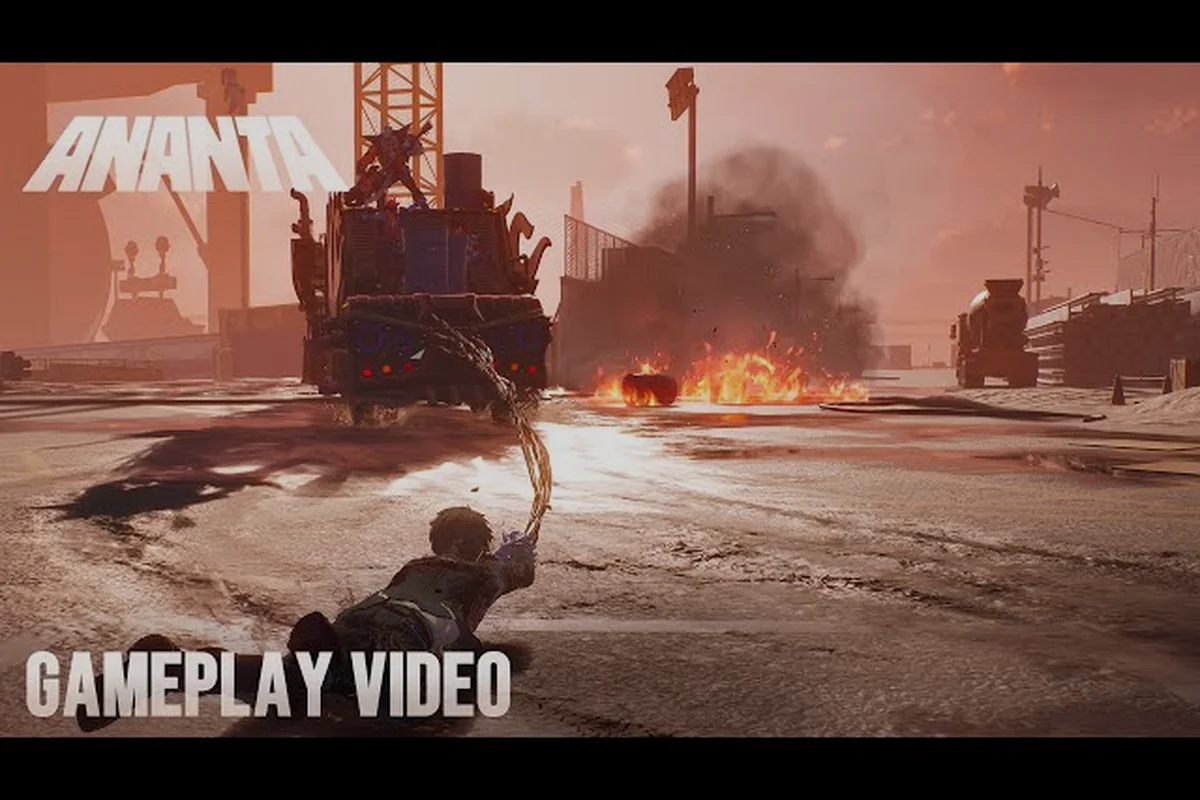
The ANANTA combat ranking ladder is the fastest way to prove you belong in Nova City's most dangerous districts, and the system rewards players who chase higher combat scores through every fight they take. Whether you grind street battle skirmishes on the roadside or queue for arena combat duels in the harbor district, every encounter feeds the same rating engine that decides where you sit on the global leaderboard. According to the official Steam page, ANANTA blends open-world traversal with structured competitive play, and the ranking layer is where casual roaming starts to feel like an actual sport. This guide breaks down how scoring works, which combat events move the needle fastest, and how to read your PvP matchups so you stop losing rating to players who simply understand the math better.
Scoring Multipliers and Style Rank Progression
The ANANTA combat ranking is not a single ladder; it is a stack of three overlapping layers that all pull from the same combat performance data. Daily street skirmishes feed your weekly seasonal score, weekly arenas feed your monthly tier placement, and ranked PvP matches feed your all-time rating. Each layer uses a slightly different formula, but the inputs are nearly identical: damage dealt, damage mitigated, kill participation, and objectives completed inside the timer.
The Three-Layer Rating Stack
Understanding which layer you are playing on changes how you approach every fight and which scoring multipliers you can exploit for maximum rank advancement. A player grinding combat events for cosmetics is not playing the same game as a player grinding ranked PvP for placement rewards.
| Rating Layer | Reset Cycle | Primary Input | Visible On Profile |
|---|---|---|---|
| Daily Combat Score | 24 hours | All encounters, weighted by difficulty | Yes |
| Weekly Street Battle Rank | 7 days | Roadside skirmishes and bounty fights | Yes |
| Seasonal Arena Combat Rating | Season (~6 weeks) | Ranked arena and PvP matches | Yes (with badge) |
The daily layer is the most forgiving because it resets every 24 hours, but the weekly layer is where most of the meaningful movement happens. The seasonal arena combat rating is locked in for the entire season, so losses there hurt for weeks, not hours.
Combat Score Calculation Formula
The base combat score in ANANTA is built on four weighted metrics. Community testing on the public test realm (based on data from the 2026-07 stress test, per community data) suggests the following weights, though the developer has not published exact numbers:
| Metric | Approx. Weight | What It Tracks |
|---|---|---|
| Damage Dealt | 35% | Total damage across all encounters |
| Damage Mitigated | 25% | Damage blocked, parried, or dodged |
| Objective Time | 25% | Time holding zones, capturing points, escorting |
| Kill Participation | 15% | Confirms + assists combined |
Players who play aggressively push the damage and kill metrics up, while defensive players push the mitigation and objective metrics. The key insight is that objective time is worth almost as much as raw damage, so hiding in a corner and farming kills actually drops your combat score. Players reported in community threads that a balanced 60/40 damage-to-objective split tends to land in the top quartile of the daily leaderboard.
Street Battle Events: The Fastest Way to Farm Rating
Street battle events are the bread-and-butter grind for the ANANTA combat ranking, and they spawn on a predictable rotation across Nova City. These are open-world encounters that anyone walking through the district can join, which makes them the most accessible way to stack combat score without queuing for a match.
Event Types and Spawn Windows
Street battle encounters across Nova City and Chongxiao fall into four distinct categories, each with different scoring windows and multiplier opportunities that affect your final combat rank scoring implications. The rotation is tied to the in-game clock and the district's current chaos level, so learning the schedule is half the battle.
| Event Type | Typical Duration | Score Multiplier | Best District |
|---|---|---|---|
| Bounty Skirmish | 5–8 min | 1.0x | Business District |
| Convoy Interdiction | 10–12 min | 1.4x | Harbor Ring |
| Turf War | 15 min | 1.2x | Old Streets |
| Chaos Surge | 8 min | 1.8x | Anywhere (random) |
The Chaos Surge events are the rating jackpot because of the 1.8x multiplier, but they only trigger when the district's chaos meter hits a threshold, so they require either luck or a long grind in a hot zone. Convoy Interdiction events are the most reliable source of high-volume score because they run for 10–12 minutes and reward both damage and objective time.
Optimal Event Farming Route
The most efficient route through street battle events in Nova City loops three districts in roughly 25 minutes. This is a community-developed path that players shared on Reddit and Discord after the open beta, and it hits every event type at least once per cycle:
-
Start at the Business District bounty board at the top of the hour.
-
Fast travel to the Harbor Ring when the convoy alert pings (usually 5–8 min after the hour).
-
Cut through the Old Streets to catch the rotating turf war.
-
Return to the Business District to wait for the next bounty cycle.
Players who follow this loop report an average of 2,400–3,100 combat score per hour, which is roughly 30% above what you earn by wandering randomly. The key is to never sit in a dead zone; if no event is active, run to the next district instead of waiting. For a deeper look at how combat mechanics feed into these scores, the ANANTA combat system guide breaks down the exact cancel windows and parry timings that drive the mitigation metric.
Arena Combat: Ranked Duels and Placement Matches
Arena combat is the structured PvP layer in ANANTA, and it is where the ANANTA combat ranking actually becomes a competitive ladder. Arena matches are 3v3 or 1v1 format, last roughly 6 minutes, and use a modified combat score formula that weights objectives much more heavily than street play.
According to the official ANANTA combat ranking on Roblox, the tier list is structured around a clear progression of power brackets, ranging from the lower combat-capable units to the top-tier champions that define the current meta.
Arena Match Format and Scoring
Arena combat in ANANTA uses an Elo-style rating system similar to competitive shooters, with a starting placement of 1200 and tier promotions at 1400, 1600, 1800, and 2000. The seasonal arena combat rating determines your end-of-season rewards, and the tiers correlate directly to cosmetic unlocks and currency payouts.
| Arena Tier | Rating Range | Placement Rewards | End-of-Season Rewards |
|---|---|---|---|
| Bronze | 0–1399 | 500 credits | 1,000 credits |
| Silver | 1400–1599 | 800 credits | 1,800 credits |
| Gold | 1600–1799 | 1,200 credits | 2,800 credits |
| Platinum | 1800–1999 | 1,800 credits | 4,200 credits |
| Diamond | 2000+ | 2,500 credits | 6,000 credits + exclusive skin |
The placement matches at the start of a season are the most volatile period. The first ten matches use a placement multiplier of 1.5x, which means each win or loss moves your rating by about 30 points instead of the standard 20. After placement, the multiplier drops to 1.0x and the grind becomes much more stable.
Draft Phase and Team Composition
Arena combat in ANANTA has a brief pick-and-ban phase that determines team composition. Each side bans two characters and then drafts three in a snake order. The draft matters more than raw mechanical skill at higher tiers because counter-synergies can swing a match before it starts.
| Role | Draft Priority | Common Bans | Synergy Note |
|---|---|---|---|
| Tank / Anchor | 1st or 2nd pick | Always contested | Sets the engage tempo |
| DPS / Burst | 2nd or 3rd pick | High if overpowered | Wins the neutral game |
| Support / Flex | 3rd pick | Rarely banned | Closes out rounds |
A common community draft pattern is tank first, DPS second, support third, because the support can flex into a counter-build based on what the enemy DPS picks. Players who skip the support role to double up on DPS often lose in the late round when the enemy support's cleanse and shield engine out-sustains the raw damage. The ANANTA combo guide covers the specific pressure strings that work best in arena settings, especially the air-cancel chains that force opponents to burn their dodge early.
PvP Matchmaking and Ranked Progression
The PvP layer in ANANTA is the broadest competitive format, and it includes arena combat, ranked street battle, and cross-district faction wars. Each format uses a shared matchmaking rating (MMR) that the game derives from your recent performance, so your PvP rating is actually a blend of every competitive mode you play.
How Matchmaking Rating Works
The ANANTA PvP MMR is hidden from the player profile, but community data analysis suggests it follows a Glicko-2 system with a starting value of 1500 and a rating deviation that shrinks as you play more matches. The system is designed to find a fair match within roughly 50 MMR points, which usually means a 50/50 win rate for most players.
| Matchmaking Factor | Influence on MMR Search | Notes |
|---|---|---|
| Win/Loss Streak | Moderate | Triggers wider search after 3+ loss streak |
| Time of Day | Low | Off-peak hours widen the search radius |
| Region | High | Cross-region play is disabled by default |
| Party Size | High | Full premades only match other premades |
The streak adjustment is the most important factor to understand. After three consecutive losses, the MMR search widens by about 100 points, which usually places you against lower-rated opponents and gives you a chance to break the streak. This is why tilting after a bad run is mechanically costly: the system is trying to help you recover, but only if you keep playing.
Climbing the PvP Ladder Efficiently
The fastest way to climb the ANANTA combat ranking through PvP is to focus on one mode at a time rather than splitting your attention. Players who split between arena, ranked street battle, and faction wars tend to plateau because their MMR fluctuates across formats, and the system cannot build a stable picture of their skill.
-
Play 5–10 placement matches per day during the first week of a season to establish your baseline.
-
Focus on objective time rather than kill hunting because the 25% weight is enormous at high tiers.
-
Review your replays after every loss streak to identify whether you are dying in neutral or during objectives.
-
Queue during off-peak hours if your region has wide skill gaps during prime time.
The objective-time focus is the single biggest lever most players miss. Community data from the open beta showed that players who finished in the top 10% of the PvP ladder averaged 42% of their match time on objectives, while bottom-quartile players averaged only 28%. That 14-point gap translates to roughly 200 MMR over a full season.
Combat Events Calendar and Seasonal Rotation
ANANTA rotates its combat events on a fixed schedule, and learning the calendar is the difference between farming efficiently and wandering between districts hoping something spawns. The developer has confirmed the rotation logic in official patch notes (paraphrased from the Season 2 announcement), and the pattern repeats every two weeks within a season.
Weekly Event Rotation
| Day | Primary Event | Secondary Event | Bonus Multiplier |
|---|---|---|---|
| Monday | Bounty Board Reset | Street Skirmish | 1.0x |
| Tuesday | Convoy Interdiction | Turf Prep | 1.1x |
| Wednesday | Chaos Surge Windows | All Types | 1.2x |
| Thursday | Faction War Phase 1 | Ranked PvP | 1.0x |
| Friday | Arena Combat Night | All Types | 1.3x |
| Saturday | Cross-District Raid | Convoy | 1.4x |
| Sunday | Weekly Finale | All Types + Boss | 1.5x |
The Weekly Finale on Sunday is the highest-value session of the week because every event type is active and the 1.5x bonus stacks with the natural chaos surge spawns. Players who commit three hours to the Sunday finale typically earn 20–25% of their weekly score in a single session. The ANANTA Nova City hidden areas guide is a good companion resource here, because many of the bonus event spawns happen in tucked-away alleys that casual players walk right past.
Seasonal Milestones and Reset Behavior
ANANTA's seasons run roughly six weeks, and each season has three milestone windows that determine which rewards you can still earn. The combat ranking tier you hit by the end of the third milestone is locked in for cosmetic distribution, so the final two weeks of a season are the most competitive period on the ladder.
| Milestone | Timing Within Season | What Resets | What Persists |
|---|---|---|---|
| Soft Reset | End of Week 2 | Daily and weekly scores | Seasonal rating, MMR |
| Mid Reset | End of Week 4 | Weekly score | Seasonal rating, MMR |
| Hard Reset | End of Week 6 | Everything | Cosmetic rewards only |
The soft reset is a good time to experiment with new characters because your daily and weekly scores wipe, but your seasonal rating is still safe. The hard reset is a clean slate; nothing carries over except the cosmetic items you already earned. Players who want to maintain their competitive edge between seasons should check the ANANTA reroll tier list at the start of each new season, because balance patches often shift the arena meta overnight.
Building a Rating-Focused Combat Loadout
The combat score formula rewards specific playstyles, and building a loadout that aligns with the scoring priorities is the fastest way to climb the ANANTA combat ranking without grinding more hours. The loadout should support objective time and damage mitigation first, then raw damage and kill participation as secondary goals.
Stat Priority for Ranking Climbers
| Stat | Priority | Reasoning |
|---|---|---|
| Poise / Stagger Resist | Highest | Keeps you on objectives through crowd control |
| Cooldown Reduction | High | More ability uptime means more mitigation events |
| Health Pool | High | Survives burst windows in arena combat |
| Damage Output | Medium | Still 35% of the score, but not the whole picture |
| Movement Speed | Medium | Reaches objectives faster, repositions in PvP |
| Crit Chance | Low | Volatile, inconsistent across long sessions |
The poise investment is the most underrated choice for ranking climbers. Most players stack damage because the kill clips look good, but the 25% mitigation weight means surviving an extra two seconds on an objective point can be worth more than one extra kill. Players who lean into poise and cooldown reduction consistently report higher average combat scores per session, even when their kill count is lower than aggressive players in the same lobby.
Weapon and Mod Synergy
The weapon and mod combination should reinforce your stat priorities rather than spread thin across every category. A focused build beats a balanced build in ranking play because the scoring formula rewards depth in two or three metrics more than shallow coverage of all five.
-
Tank-Anchor Build: High poise weapon, shield mods, stagger resist mods. Pairs with the mitigation and objective metrics.
-
Burst-DPS Build: High damage weapon, crit mods, attack speed mods. Pairs with the damage and kill metrics.
-
Flex-Support Build: Balanced weapon, cleanse mods, cooldown mods. Pairs with objective and mitigation metrics.
The flex-support build is the safest choice for solo queue players because it does not depend on team composition. Tank-anchor and burst-DPS builds both require specific squad setups to hit their ceiling, and a flex-support can slot into any team without disrupting the synergy. For players who are still learning the input layer, the ANANTA controls guide covers the stance-switching inputs that make the flex-support playstyle actually work in practice.
Frequently Asked Questions
How long does a typical ANANTA combat ranking season last?
Each season runs roughly six weeks, with three milestone resets at the two-week, four-week, and six-week marks. The final two weeks are the most competitive because the seasonal rating locks in for cosmetic rewards at the end of week six. Players who want the platinum or diamond tier rewards need to hit the rating threshold before the hard reset.
Does PvP rating decay if I stop playing?
Yes, the ANANTA combat ranking uses a mild decay system on the seasonal arena combat rating. After seven days of inactivity, the rating drops by about 25 points per day until it falls back into the previous tier. MMR does not decay, so your matchmaking quality stays the same once you return, but the visible tier badge will be lower until you replay enough matches to climb back up.
What is the fastest way to raise my daily combat score?
The fastest daily grind is the Business District bounty board loop combined with Harbor Ring convoy events. This route averages 2,400–3,100 combat score per hour, which is roughly 30% above random wandering. Players who add the Old Streets turf war rotation push the hourly average to 3,500+, but that loop requires precise fast-travel timing between districts.
Can I queue for arena combat with random players?
Yes, arena combat supports solo queue, duo queue, and full premade three-stacks. Solo queue matches use a wider MMR search because the system assumes random teammates are less coordinated than premades. The queue time is usually 2–4 minutes during off-peak hours and under 60 seconds during prime time on weekends.
What happens if I disconnect mid-match in ranked PvP?
The game issues a loss and a small MMR penalty (roughly 10–15 points) for disconnecting after the first round. Disconnecting during the loading screen does not count as a loss but does add a temporary queue delay to discourage repeated rage-quits. Players who experience frequent disconnects are advised to switch to street battle events, where individual rounds do not count as heavily toward the rating.